
Bathroom Remodeling in Boston: The 2026 Guide to Premium Renovations

What makes a bathroom renovation feel at home in an older Boston-area house? Successful bathroom remodeling boston projects balance modern comfort with the character and practical realities of the existing home. Before choosing tile or fixtures, understand the room’s layout, condition, and scope of work. Those details shape the decisions that follow, from construction planning to finish selections.
If you’re concerned about hidden water damage, structural issues, scheduling, or unclear communication, look beyond the initial design. A full renovation needs a defined scope, written expectations, and a plan for coordinating the work. Remod Group provides full-scale interior renovations, including bathroom remodeling, for homeowners in MetroWest communities.
This guide covers how to plan a comfortable primary bathroom, consider risks in older homes, and evaluate contractors for project coordination and communication. You’ll also find practical ways to compare features and materials, prepare for construction, and make design choices that suit both your home and your routine.
Table of Contents
Planning Bathroom Remodeling Boston Homes May Need
A bathroom can be more than a functional room, but comfort starts with how the space works. A well-planned renovation might include a more usable shower, better task lighting, or storage that suits the household. In an older home, those upgrades must be considered alongside the existing structure and systems. A strong plan accounts for both what you want to change and what the room can support.
Cosmetic updates can refresh a bathroom, but they won’t correct concealed wear or resolve a layout that doesn’t work. A full-scale renovation lets homeowners consider the room as a whole, including the condition behind the finishes, water management, and the relationship between fixtures and available space. The process of improving a home is easier to manage when the scope is clearly described before construction begins. Ask contractors how they plan to handle material availability, schedule changes, and decisions that arise during the work. Record the answers in the project expectations.
Navigating Older Boston-Area Homes
Older homes around Concord, Sudbury, and other MetroWest communities may have tight framing, older finishes, or concealed damage that affects a bathroom plan. Opening a wall can reveal water damage or other conditions that change the work needed. If you’re considering moving fixtures or altering walls, ask how those changes affect the scope and which approvals may be required. Confirm applicable permits and any historic-district review with the local authorities, since requirements depend on the property and project.
Before work begins, discuss how unexpected conditions will be documented and presented to you. A useful process includes an explanation of the issue, the available options, any effect on the agreed scope, and your approval before additional work proceeds. This helps avoid confusion when the original plan needs to change.
Prioritizing Long-Term Appeal in MetroWest
In Weston, Wellesley, and nearby communities, a thoughtful primary bathroom renovation can improve a home’s appeal, though no project guarantees a specific resale return. Favor choices that balance appearance with everyday use: durable surfaces, effective ventilation, and a layout that allows comfortable movement. Requirements for energy-related work may vary, so ask the local building department and contractor what applies under current Massachusetts rules.
Bathroom remodeling boston projects also require realistic planning for the home’s age and the amount of work involved. A contractor familiar with MetroWest homes can help you identify decisions to make before construction and clarify how the renovation will be approached as a whole. Remod Group focuses on full-scale interior renovations. The goal is to bring modern function into the home while making design and construction decisions that suit the property.
Premium Features for a Modern Boston-Area Bathroom
A premium bathroom is not defined by finishes alone. Useful upgrades should support daily routines, fit the available space, and be practical to maintain. For bathroom remodeling boston homeowners can compare features by asking what each one solves and what it requires:
Walk-in or wet-room showers: A walk-in shower with carefully planned glass can make a room feel more open. A wet-room layout creates a more continuous floor, but requires careful planning for water containment and drainage. Check that the proposed design suits the room and its construction.
Radiant heated floors: In-floor heat can add comfort underfoot. Decide early whether it belongs in the plan, so it can be coordinated with the floor assembly and other work.
Smart controls: Integrated lighting and high-tech fixtures can make routines more convenient. Before choosing voice-activated or connected controls, check compatibility with the fixtures and controls you plan to use.
Durable surface materials: Natural stone offers distinctive variation, while high-performance composites can provide a more consistent appearance. Compare maintenance needs, finish, and suitability for wet areas before making a selection.
Compare materials based on more than color and pattern. Ask how each option handles moisture, routine cleaning, and the wear expected in your household. If a new shower or fixture layout changes the project, review the Boston permit requirements and confirm what applies to your property before work begins.
Planning a Primary Bathroom Suite
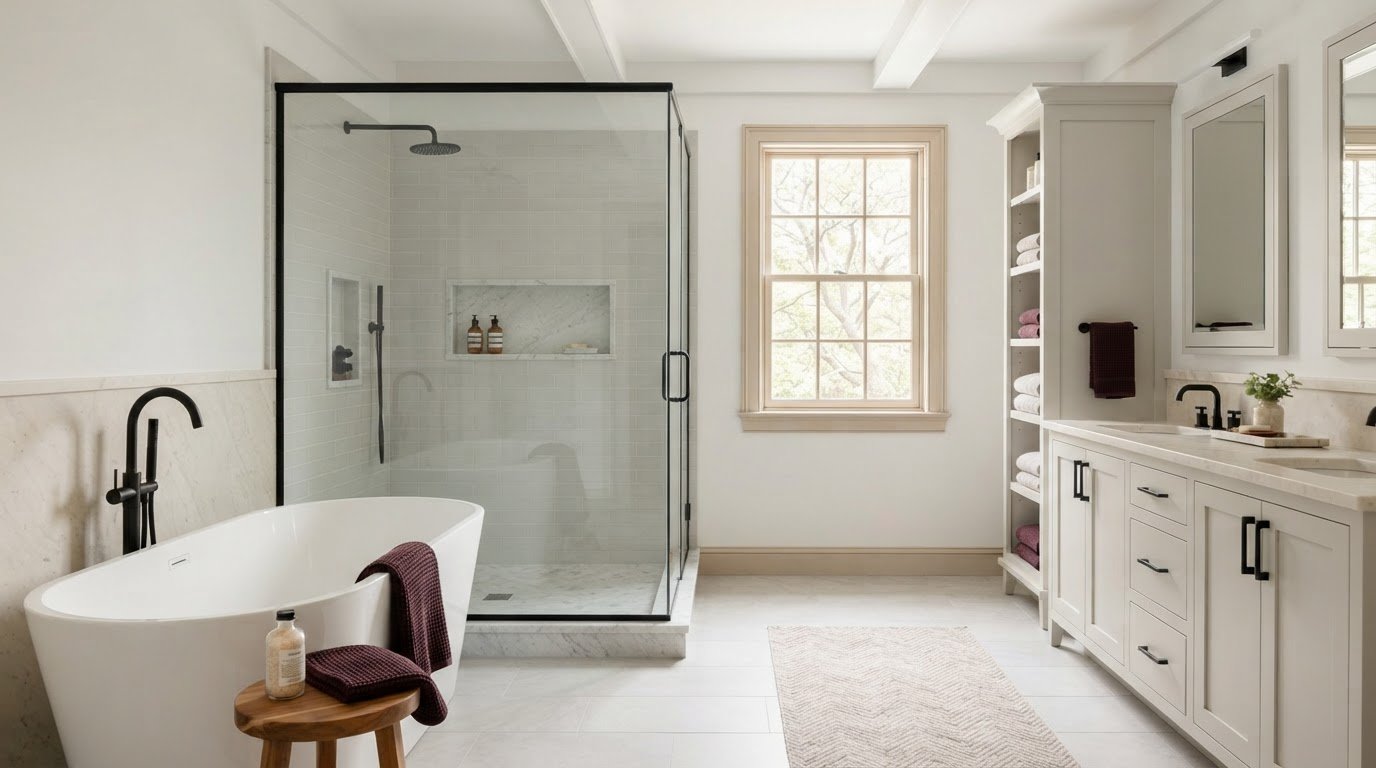
A freestanding soaking tub can become a focal point, but only if there is enough room to move around it comfortably. Double vanities may help with shared routines; plan storage and counter space as carefully as the sink locations. For lighting, consider task light at the mirror and softer ambient light elsewhere. Thinking through how the room will be used at different times of day can help keep the design both attractive and functional.
Before settling on a layout, check the circulation space around doors, drawers, and fixtures. If the plan adds a feature but makes daily movement awkward, reconsider the tradeoff. A simple list of priorities, such as shower space, storage, or a shared vanity, can help guide choices when the room cannot accommodate everything.
Accessibility and Everyday Function
A zero-threshold shower can create a clean transition into the shower area, but it must be coordinated with the room’s water-management plan. Grab bars, integrated seating, and clear circulation can also support changing needs while maintaining a considered design. These features are worth discussing early, particularly if you want the bathroom to remain practical as household needs change. Requirements depend on the home and project scope.
Treat the room as a connected system. Shower placement, lighting, storage, and surface choices all need to work in the space available. Homeowners planning a full-scale project can explore Remod Group’s bathroom remodeling services while considering how those priorities fit into one renovation.
How to Evaluate Bathroom Renovation Contractors
A small bathroom refresh and a full renovation call for different levels of planning. A handyman may be suitable for a limited repair, but demolition, hidden conditions, multiple trades, or a redesigned room require someone prepared to manage the work as a complete project. For bathroom remodeling boston homeowners should look for a clearly explained scope, written expectations, a plan for coordinating work, and a reliable way to discuss decisions.
Ask prospective contractors which Massachusetts credentials apply to the work they’re proposing, including Home Improvement Contractor (HIC) registration and a Construction Supervisor License (CSL). Requirements can depend on the contractor’s role and project scope. Check current information through the state’s Home Improvement Contractor (HIC) program, then ask the contractor to explain which credentials apply to your project.
When comparing proposals, check whether each covers the same work. Ask who will coordinate the schedule, how changes will be recorded, and how you’ll receive updates. Review completed projects with a similar scope and home type, rather than judging a contractor only by photographs of finishes. Local MetroWest experience may be useful when planning work in an older home in Natick or Hudson. Request relevant references and ask about communication, unexpected conditions, and how the completed work compared with the agreed scope.
Questions to Ask Before Hiring
How do you handle hidden water damage? Look for a clear explanation of how discoveries are documented, options are presented, and approval is obtained before additional work proceeds.
What is your experience with full-scale renovations? Ask for examples that show how the contractor handled demolition, unexpected conditions, trade coordination, and project completion.
Can you provide references from relevant local projects? Ask past clients about communication, schedule management, and whether the finished work matched the agreed scope. If local references matter to you, ask specifically about projects in Natick or Hudson.
Red Flags to Watch For
Be cautious if a bid is much lower than comparable proposals and the contractor cannot clearly explain what is included. An incomplete scope can lead to misunderstandings or change orders. A vague contract, no written schedule, or unclear process for approving changes can also make expectations difficult to manage. Finally, consider whether the contractor is equipped to coordinate the complete renovation. Separate trade services do not automatically add up to one accountable plan for the room.
Remod Group focuses on full-scale interior renovations in MetroWest rather than minor repairs. Homeowners planning a complete bathroom transformation can review Remod Group’s bathroom remodeling information and consider whether a full-project approach matches their needs.
Planning and Budgeting for Your Remodel
A well-organized renovation starts before demolition. For bathroom remodeling boston homeowners should define the desired work, make key selections, and agree on how decisions and changes will be handled. Ask for a written scope that explains what is included, what may require additional work, and how changes will be reviewed and approved. Because concealed conditions may not be visible until walls or finishes are opened, discuss how those discoveries could affect the plan.
Prioritize decisions that are difficult to change later, such as the layout, water management, ventilation, and surface materials. Then compare visible upgrades, including specialty finishes and decorative fixtures, against the overall plan. Older homes may reveal water damage or other conditions during demolition. Ask who will explain the options, how any change to the scope will be documented, and whether work pauses for your approval.
Design and Permitting
Simple sketches can help communicate an early idea, but a project that changes walls, fixture locations, or other significant parts of the room may require more developed plans. Confirm the documents and permit process with the building department in Waltham, Newton, or the town where the property is located. Review times vary, so don’t rely on a generic estimate when planning the schedule. Select tile, fixtures, and other finish materials early, and check availability before construction dates are set.
A full renovation typically moves through planning, approvals, demolition, construction, finish installation, and a final walkthrough. The schedule depends on the project scope, permit review, material availability, and conditions found during the work. Ask for a schedule that identifies key decision points and explains how updates or changes will be communicated.
Preparing Your Home for Construction
Before work begins, discuss how the work area will be separated from the rest of the home and how nearby floors and furnishings will be protected. If the bathroom will be unavailable, decide which alternative your household can use. Also agree on who will provide progress updates, how questions will be handled, and how approvals will be recorded. Clear communication protocols can reduce uncertainty while work is underway.
Discuss trade coordination, schedule updates, and the process for making decisions as the project unfolds. These details are as important to preparation as choosing finishes. Learn about Remod Group’s full-scale bathroom remodeling as you consider the scope and priorities for your home.
Remod Group and Full-Scale Bathroom Renovations
A thoughtful bathroom renovation needs a clear plan and careful construction. Remod Group provides full-scale home remodeling, including bathroom renovations, for homeowners in MetroWest. For people searching for bathroom remodeling boston contractors, it is useful to distinguish a complete renovation from isolated repairs: the scope may involve planning the room, addressing existing conditions, and coordinating the work needed to deliver the finished space.
Remod Group focuses on substantial renovations rather than minor handyman tasks or standalone plumbing and electrical services. When considering a project, discuss how the proposed scope, selections, and construction work fit together. That conversation can help establish whether the company’s full-scale remodeling services suit your plans.
Discussing Project Coordination
Before hiring a contractor for a full bathroom project, clarify who will manage the schedule, how decisions will be documented, and how proposed changes will be discussed. Ask how material selections fit into the plan and which trades or suppliers may be involved. The answers help establish expectations and show whether the proposed approach makes sense for your project.
Remod Group serves homeowners in Hudson, Natick, Sudbury, and other MetroWest communities. The company’s focus on substantial interior renovations provides a starting point for discussing your home, goals, and project scope. As you compare contractors, look for clear answers about what the work includes and how the renovation will be approached.
Getting Ready to Plan a Renovation
Before speaking with a remodeling contractor, make a list of the features you want, the problems you need to solve, and any concerns about the existing bathroom. Note which choices matter most, such as a larger shower, better storage, or a revised layout. Ask whether the contractor has handled projects of similar scope and how the proposed work will be defined. If you want to review a portfolio, request examples relevant to your home and renovation rather than assuming particular local projects are available.
A useful first conversation is specific about goals, scope, and expectations. Homeowners considering a full-scale bathroom renovation in MetroWest can discuss their bathroom remodeling project with Remod Group.
Shape a Bathroom That Belongs to Your Home
A successful renovation begins with a clear plan: respect the character of the house, choose features that support everyday comfort, and work with a contractor prepared for the full scope. These priorities matter in bathroom remodeling boston projects, where an older home may have conditions that a surface refresh won’t address.
Remod Group provides full-scale interior renovations for homeowners in MetroWest, including kitchen and bathroom remodeling. For a bathroom project, start by defining the work you want done and asking how the contractor will approach the agreed scope. Clear expectations can help you assess whether the proposed renovation fits your home and priorities.
Ready to discuss a full-scale bathroom renovation in MetroWest? Contact Remod Group to talk about your bathroom project.
Frequently Asked Questions
How much does a high-end bathroom remodel in Boston cost?
Cost depends on the scope, the condition of the existing bathroom, and the finishes and features selected. A full gut renovation or changed layout involves different work from replacing surface finishes while leaving fixtures in place. Because concealed damage or structural conditions can affect the plan, request a detailed written estimate that defines the included work and explains how changes will be approved. Remod Group can discuss the scope of a full-scale bathroom renovation.
How long does a full bathroom gut renovation typically take?
There is no single timeline that fits every home. Demolition findings, project complexity, permit review, trade coordination, and material availability can all affect the schedule. Before work begins, ask for a written timeline that identifies major stages, decision deadlines, and how changes will be communicated. In an older MetroWest home, discuss the possibility of concealed conditions before agreeing on expectations.
Do I need a permit for a bathroom remodel in Massachusetts?
Some bathroom renovations require permits, particularly when the project changes the layout or involves structural work or building systems. Requirements depend on the work and local jurisdiction, so confirm them with the building department before construction. This applies to homeowners in Hudson, Natick, Sudbury, Waltham, Ashland, Hopkinton, Bolton, Northborough, Southborough, Westford, Stow, Maynard, Wayland, Concord, Weston, Wellesley, Sherborn, Acton, Boxborough, Berlin, Shrewsbury, Boylston, Newton, Needham, Dedham, and Dover.
What is the difference between a primary bathroom and a powder room remodel?
A primary bathroom is usually a larger, more complex space designed for daily routines, often with a shower or tub, vanity storage, and multiple fixtures. A powder room is typically a smaller guest bathroom with a sink and toilet. The difference affects layout, material quantities, and scope. A primary bathroom may need broader planning, while a powder room project can focus on making a compact space polished and functional.
Can I stay in my home during a full bathroom renovation?
Often, homeowners can remain in the house, but it depends on the project and how many usable bathrooms are available. A full renovation makes that bathroom unavailable during construction, and demolition can bring noise, dust, and activity into the home. Before work begins, ask how adjacent areas will be protected and how the schedule will be communicated. Plan an alternative bathroom arrangement in advance, especially if the home has no other full bathroom.
Does Remod Group handle plumbing and electrical as part of the contract?
Remod Group focuses on full-scale bathroom remodeling, not standalone plumbing or electrical services. Whether plumbing or electrical work is included in a particular renovation depends on the agreed project scope. Ask the written proposal to identify included work and explain how relevant trades will be coordinated. Clarify responsibility for permits, scheduling, and communicating changes so you understand how each part of the project fits together.
Why choose a full-scale contractor over a bathroom wrap company?
A full-scale contractor may suit a project that goes beyond visible surfaces, such as a changed layout, demolition, or conditions discovered inside walls. A bathroom wrap may suit a narrower surface-focused update, depending on the product and project. Compare proposals by scope, not just appearance. Ask what existing conditions each approach addresses, what it leaves untouched, and who will coordinate any additional work your renovation requires.
What are suitable materials for a long-lasting bathroom in New England?
Choose materials suited to frequent moisture and regular cleaning, and confirm that they are appropriate for the specific application. Porcelain tile is one option for floors and wet-area surfaces. Natural stone offers distinctive character but may require more attentive care, while high-performance composites can provide a consistent finish. Ask about maintenance, installation requirements, ventilation, and water management as part of the renovation plan.
Comments