
Siding Installation in Massachusetts: A Homeowner’s Buying Guide

What matters most in siding installation Massachusetts homeowners are planning may not be the color or profile, but what lies beneath the existing exterior. A successful project starts with understanding the home’s condition and choosing materials that suit its appearance, upkeep needs, and exposure to New England weather. Hidden moisture or damaged sheathing can affect the work, so the plan should account for conditions that may be uncovered when old siding comes off.
It’s reasonable to want an exterior that looks right, performs reliably, and comes with a clear understanding of the work involved. Material choice, the home’s existing condition, and the scope of removal and preparation all shape the project. A well-planned installation brings those details into focus before work begins.
This guide explains how to compare practical siding options, plan for moisture and concealed damage, and understand the steps that influence an estimate. You’ll also learn what to expect during installation and how Remod Group approaches siding as an exterior-envelope project, where appearance, protection, and careful execution work together.
Table of Contents
Planning siding installation in Massachusetts: what should homeowners expect?
Siding shapes a home’s appearance, helps protect its exterior, and influences the upkeep it will need over time. Start by defining the project. A replacement updates existing siding; a new installation adds siding to a home or area that doesn’t currently have it; a broader exterior renovation may coordinate siding with related elements such as trim, windows, or doors.
That distinction matters. A homeowner focused on refreshing the facade may have different priorities from someone addressing deterioration or planning several exterior updates together. The scope of siding installation Massachusetts homeowners need depends on the home, selected materials, and conditions identified during assessment.
When does a Massachusetts home need new siding?
Loose sections, visible wear, recurring paint problems, or signs of moisture are reasons to arrange a professional assessment. They can point to issues worth investigating, but they don’t show the full condition of the wall beneath the siding. Hidden moisture or damage may only become apparent when existing material is removed, so the project plan should allow for findings that affect the scope.
Massachusetts homes face changing seasonal conditions, including rain, snow, wind, and temperature shifts. These exposures are useful context when comparing materials and installation details, but the right approach depends on the specific building rather than a one-size-fits-all assumption.
What should a siding project accomplish?
Balance the appearance you want with practical priorities: exterior protection, acceptable maintenance, and a finish that suits the home’s architectural character. Existing trim, openings, and transitions affect how new siding fits together. The home’s exposure and observed condition also help shape the plan. A useful overview of siding or wall cladding can help homeowners understand the range of siding types and installation approaches.
Siding installation is a coordinated exterior-envelope project, not simply the application of a new surface. The plan should account for how siding relates to surrounding details and how removal, if included, may reveal conditions that need attention. An assessment helps define the work before the scope is finalized.
Replacement: Update existing siding, with removal and any concealed conditions addressed according to the agreed scope.
New installation: Add siding where the home or a specific area needs an exterior finish.
Broader renovation: Coordinate siding with other exterior updates when the project calls for it.
Keep the objective clear while leaving room for findings. The home’s existing condition, chosen materials, and details uncovered during assessment can all influence the work involved.
Choosing siding for Massachusetts weather: materials, appearance, and upkeep
Material choice affects more than curb appeal. Compare the look you want, the upkeep you’re prepared to take on, and how the home’s details and exposure shape the installation. Massachusetts weather brings seasonal changes, including freezing and thawing, wind-driven rain, and periods of moisture. These conditions make planning around drainage, ventilation, transitions, and the existing exterior especially relevant, but they don’t make one siding category the right choice for every home.
How do siding materials differ in appearance and maintenance?
Vinyl, fiber cement, wood, and engineered wood each offer distinct visual possibilities. Profiles, textures, and available finishes vary by product, so compare actual samples and specifications rather than relying on broad claims about a material category. Maintenance also depends on the specific product, finish, installation, and exposure. Review care instructions for the options you’re considering, including how the surface should be cleaned and whether it needs periodic refinishing.
Color and texture complete the design. A subtle profile can preserve the character of a traditional home, while a more pronounced texture creates a different visual effect. Trim, corners, and the areas around windows and doors matter just as much. These details help the finished exterior feel deliberate and cohesive.
Which siding considerations matter in New England?
Look beyond the broad climate label. One wall may receive more wind-driven rain or remain damp longer than another, while roof edges, openings, and transitions can influence where water travels. An assessment should consider these conditions alongside drainage and ventilation details, the current wall assembly, and the care required for the material and finish. Separate general material characteristics from product-specific installation instructions, performance claims, or guarantees.
Material suitability depends on the home’s conditions and the homeowner’s priorities. As you develop the project scope, the state’s Massachusetts Home Improvement Contractor (HIC) program provides official information for homeowners about working with home improvement contractors. Remod Group’s siding installation work brings material choices and exterior details together in a coordinated plan.
How to evaluate a siding installation plan and project scope
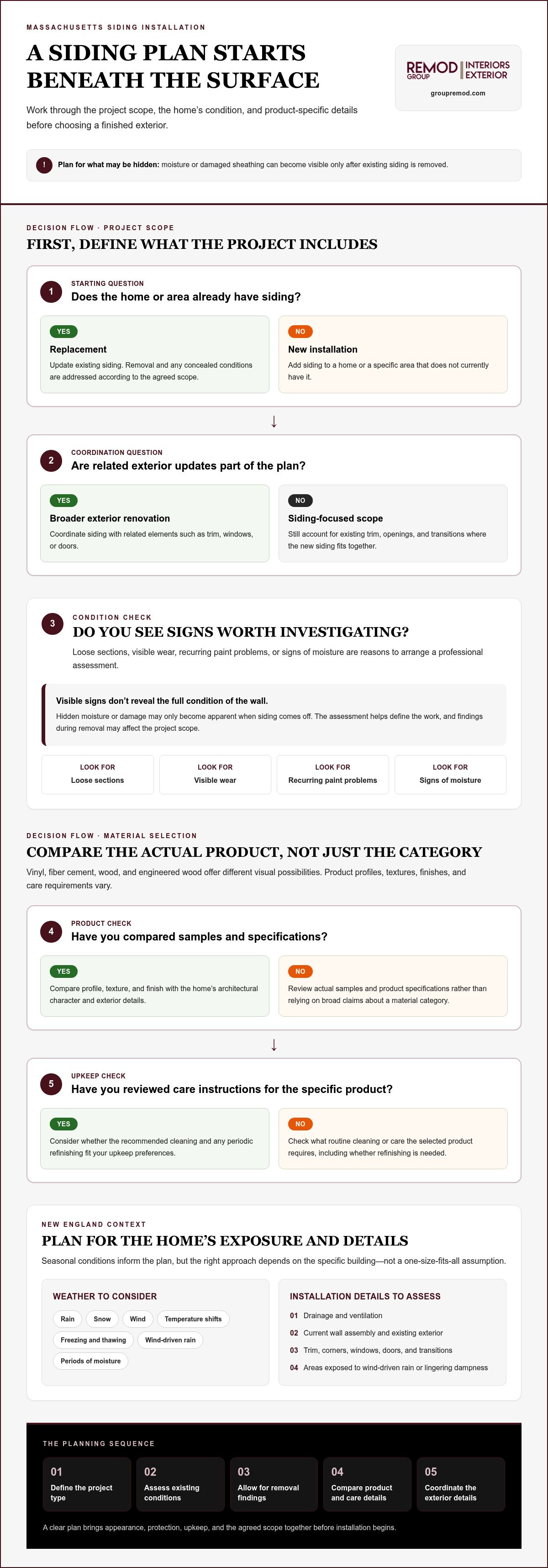
A clear plan turns a broad goal, such as updating the exterior or addressing worn siding, into defined work. For siding installation Massachusetts homeowners should look beyond the material choice: the home’s current condition, adjoining details, and preparation needs all influence the scope and estimate. Use this framework to review the project before comparing proposals.
1. Define your goals. Decide whether appearance, reduced upkeep, exterior protection, or coordination with other exterior work is the main priority.
2. Assess existing conditions. Consider the siding’s condition and visible moisture concerns, along with trim, windows, doors, corners, and other transitions.
3. Compare materials. Choose a material category and finish that suit the home’s character, exposure, and care preferences.
4. Review the scope. Identify the areas covered, removal and preparation work, trim details, cleanup responsibilities, and how concealed conditions will be handled.
5. Plan the installation. Align the work sequence with the selected material, the home, and the agreed scope.
What belongs in a clear siding project scope?
A useful scope describes which walls or sections are included, the siding category, and how trim and exterior details will be addressed. It should also specify what preparation and cleanup are part of the work. Roofline edges and transitions deserve attention because siding meets other exterior components there. Homeowners planning related roof work can also review the residential roofing guide as part of the broader exterior picture.
Some wall conditions remain concealed until siding is removed or an area is inspected more closely. Moisture or damage may be present, but it isn’t inevitable. The plan should distinguish expected work from conditions that can only be evaluated once accessible, and explain how resulting scope changes will be addressed. That clarity helps set realistic expectations without assuming a problem exists.
How can homeowners compare siding proposals fairly?
Compare proposals side by side, not just by the headline estimate. Check whether they describe the same areas, material category, removal, preparation, trim work, and cleanup responsibilities. Differences in these details can mean proposals cover different amounts of work, so a lower figure alone doesn’t tell the full story.
An estimate can also reflect home size and layout, access, the chosen material, existing exterior details, and conditions discovered during assessment. Remod Group helps homeowners plan substantial siding projects around their exterior goals, connecting material decisions with the specific areas and details the work needs to address.
What happens during siding installation in Massachusetts?
A well-managed siding project follows a clear sequence, with details shaped by the home, selected materials, and agreed scope. Planning establishes the work areas and coordination needs. Site preparation follows, then removal if it’s part of the project, installation, and a review of the completed work and affected areas. The order and methods may vary, particularly when existing exterior details call for a tailored approach.
How is a siding installation project prepared?
Preparation begins with the property itself. Access around the home, nearby landscaping, outdoor furniture, and exterior fixtures can all affect how work areas are arranged and protected. Homeowners can help by clearing movable items near the walls and discussing access needs and expected disruption with the project team before work begins.
Scheduling and site preparation should reflect the agreed scope and the specific home, not a generic timeline. Permit and code requirements can vary by municipality and project details. For siding installation Massachusetts homeowners should review the applicable requirements for their town rather than assume one rule applies statewide.
What should homeowners expect during and after installation?
If removal is included, its extent follows the project scope. The existing exterior and chosen siding system influence installation methods and how the work proceeds around trim, openings, and transitions. Concealed conditions may only become visible once an area is accessible; their presence or required repairs shouldn’t be assumed in advance. If the scope needs to change, clear communication helps homeowners understand what has been found and how it relates to the planned work.
At completion, a review can focus on the visible siding, adjoining details, and work areas. The review should reflect the project’s agreed scope rather than rely on a universal checklist. If siding work is coordinated with roofing or window and door installation, those connections can be considered in the project plan as well.
In brief: Plan the work, prepare the site, remove existing siding if scoped, install the selected system, then review the completed areas. Each step is tailored to the home and agreed project scope.
Remod Group provides residential siding installation as part of its exterior construction and remodeling work. Learn more about siding installation with Remod Group and the steps involved in planning an exterior project.
Why plan your Massachusetts siding installation with Remod Group?
Siding is a substantial exterior construction project, not simply a surface refresh. The material and finish shape the home’s appearance, while the scope must account for how siding meets trim, rooflines, windows, and doors. Careful planning brings those details into one coherent project, with the work aligned to the home’s condition and the homeowner’s goals.
How does siding fit into a complete exterior renovation?
Exterior transitions deserve attention. Siding meets roof edges and surrounds windows and doors, so choices in one area can affect how the finished exterior looks as a whole. If roofing or window and door work is also part of your plans, considering those elements alongside siding can help clarify the overall scope. Remod Group provides residential siding installation, roofing services, and window and door installation as part of its exterior construction and remodeling work.
Think about the result you want: a refreshed facade, siding coordinated with other exterior updates, or a project focused on particular areas of the home. Remod Group serves communities including Hudson, Natick, Sudbury, Waltham, Ashland, Hopkinton, Bolton, Northborough, Southborough, Westford, Stow, Maynard, Wayland, Concord, Weston, Wellesley, Sherborn, Acton, Boxborough, Berlin, Shrewsbury, Boylston, Newton, Needham, Dedham, and Dover. A clear project goal gives the planning process a strong starting point.
What is the next step for a siding project?
Bring together the essentials: where the home is, what you want to change, which exterior details matter most, and the look you’re aiming for. You don’t need every material decision settled before starting a conversation. Sharing your priorities helps shape a useful discussion about project scope and how siding work fits your home.
For homeowners considering siding installation Massachusetts, Remod Group offers a local remodeling perspective on planning the work as a coordinated exterior project. Start with your goals and outline the scope of the work.
Move forward with a clear siding plan
A successful siding project begins with more than choosing a color. Match the material to your home’s appearance, upkeep priorities, and local exposure, then define the scope around existing siding, trim, openings, and any conditions found during assessment. A thoughtful installation plan helps you understand the work ahead and make informed decisions if concealed areas require further attention.
For siding installation Massachusetts homeowners can work with Remod Group, which provides residential siding installation in communities including Hudson, Natick, Sudbury, Waltham, Concord, and nearby towns. If your exterior goals also involve roofing or window and door installation, those related services can be part of the wider project plan.
Start with what matters most to you: the areas you want to update, the look you hope to achieve, and your project priorities. Discuss your Massachusetts siding project with Remod Group and take the next step in planning your exterior renovation.
Frequently Asked Questions
How much does siding installation cost in Massachusetts?
The cost of siding installation in Massachusetts depends on the home, project size, material selection, existing exterior conditions, and agreed scope. A project-specific estimate should reflect the actual work and materials rather than rely on a broad average that may not fit your property. When reviewing proposals, compare equivalent scopes, including the areas covered and preparation involved. That gives you a more useful basis for understanding differences and evaluating the project plan.
What is the best siding for a Massachusetts home?
There’s no single best siding material for every Massachusetts home. The right choice depends on the house’s architecture, exposure, moisture conditions, maintenance preferences, and desired appearance. Vinyl, fiber cement, wood, and engineered wood differ in profile, texture, and finish, while care guidance varies by product. Compare those details for your home instead of choosing based on one feature or a broad claim about New England weather. Consider the full project, including trim and transitions.
How long does siding installation take?
Siding installation duration depends on the home’s size and layout, selected siding, preparation needs, weather, and any conditions that affect the agreed scope. A home with complex exterior details may require a different work plan from one with simpler wall areas. Base expectations on the specific property and project plan rather than a universal timeline. Clear communication about the work sequence helps homeowners understand how installation will proceed.
Do I need a permit for siding installation in Massachusetts?
Whether a permit is needed can depend on the municipality and the specific project. Requirements for a home in Hudson may differ from those that apply in Natick or another town, so don’t assume a single rule covers every Massachusetts property. Review current guidance for the municipality where the home is located and the details of the planned work.
Can siding installation uncover water damage behind the existing siding?
It can reveal concealed moisture or damage, but that isn’t inevitable. Exterior appearance alone can’t establish the full condition of wall components beneath the siding. If existing material is removed, newly accessible areas may show conditions that weren’t visible beforehand. Those findings can affect the project scope and the work required. Planning should account for this possibility without assuming damage will be present, absent, or included in the original work plan.
Can siding be installed as part of a larger exterior renovation?
Yes. Homeowners can plan siding alongside related exterior work when it fits the property and their goals. Remod Group provides siding installation, roofing services, and window and door installation, which may be relevant when coordinating exterior transitions or broader updates. The right scope depends on the home and desired outcome. Remod Group serves communities including Hudson, Natick, Sudbury, Waltham, Concord, and nearby towns. Defining your project goals is a practical first step.


Comments