
Home renovation ROI in Massachusetts: Which Updates Add Value

The biggest renovation isn’t always the strongest resale-value play. Renovation returns vary by project and local market, so kitchen and bathroom updates may not recoup the same share of their costs at resale. In 2024 New England Cost vs. Exterior updates such as garage-door replacement can be strong resale-value projects.
It’s natural to look first at kitchens and bathrooms: buyers notice how these rooms look and function. But resale value also reflects curb appeal, maintenance needs, energy efficiency, and local buyer priorities. Bigger and more expensive doesn’t automatically mean a better return.
This guide compares kitchen, exterior, and bathroom updates, then considers how Massachusetts buyer preferences can shape each project’s value. You’ll see why targeted improvements may make more sense than a luxury overhaul, and how to look beyond a single ROI estimate when deciding what to renovate.
Table of Contents
1. Minor kitchen remodel ROI
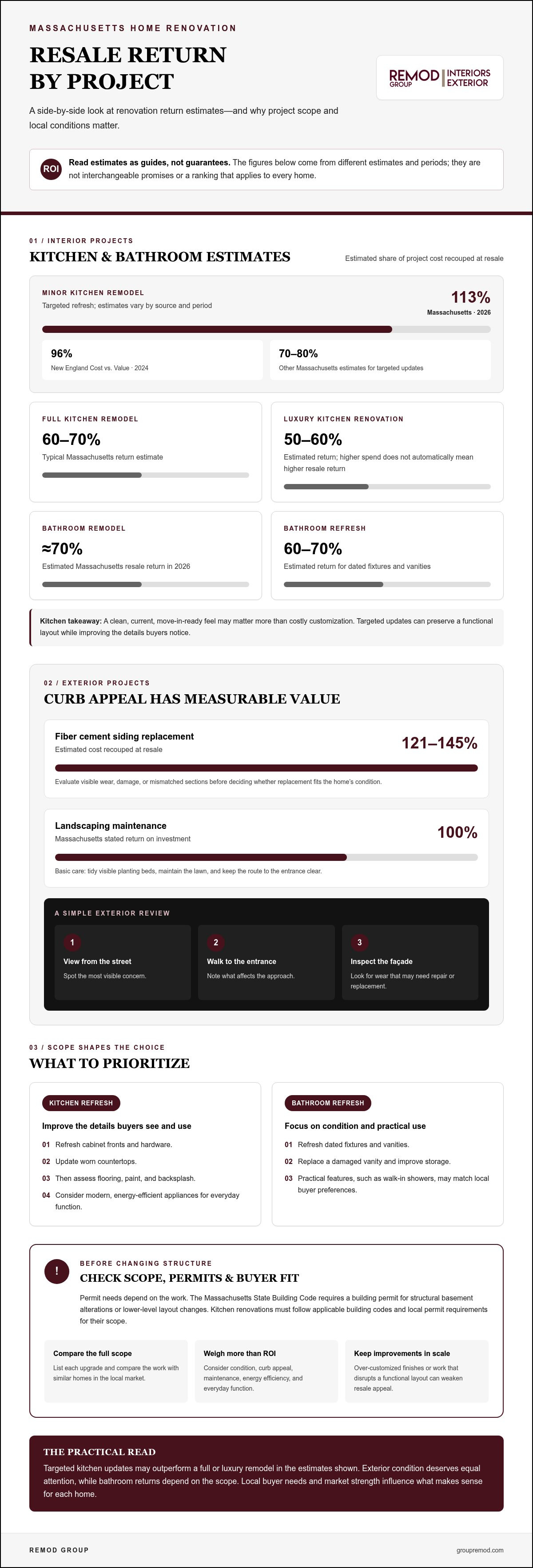
A minor kitchen remodel focuses on visible, functional improvements rather than a full rebuild. Massachusetts estimates put its resale return at 113% in 2026, while the New England 2024 Cost vs. Value data reports a 96 percent return. Other Massachusetts estimates place returns from targeted updates, such as countertops, cabinet refacing, and updated appliances, at 70-80%. These figures use different estimates and periods, so treat them as guides rather than interchangeable promises.
Buyers may respond more to a kitchen that feels clean, current, and ready to use than to costly customization. Consider a sequence: refresh cabinet fronts and hardware, update worn countertops, then assess flooring, paint, and backsplash. Modern, energy-efficient appliances can also support everyday function. If you’re planning to list soon, focused upgrades may help the home show well without the scope of a complete overhaul.
Kitchen remodel ROI varies with project scale. A full kitchen remodel in Massachusetts typically returns 60-70% on investment, while a luxury kitchen renovation is estimated at 50-60%. The highest spend doesn’t automatically produce the highest resale return: highly personalized finishes can narrow the pool of interested buyers. A well-planned, minor kitchen remodel can preserve a functional layout while improving the details buyers notice.
Bathroom projects offer a useful comparison: Massachusetts bathroom remodels are estimated to return approximately 70% of their cost at resale. Refreshing dated fixtures and vanities is estimated at 60-70%. In short, kitchen and bathroom returns differ by scope, with targeted kitchen updates sometimes showing higher estimates than a full remodel.
Permit needs depend on the work. The Massachusetts State Building Code requires a building permit for structural basement alterations or lower-level layout changes. Kitchen renovations must also follow applicable building codes and local permit requirements for their scope. Before changing walls, utilities, or a basement layout, define the planned work and its effect on the home’s structure.
To estimate a project’s value, list each upgrade, compare its full scope with similar homes in the local real estate market, and prioritize condition and buyer appeal. Assess a basement conversion separately from a kitchen refresh, since their functions and potential buyers differ. Over-customized finishes, a luxury-scale remodel, or work that disrupts a functional layout can weaken resale appeal and increase financial risk.
2. Exterior improvements and curb appeal
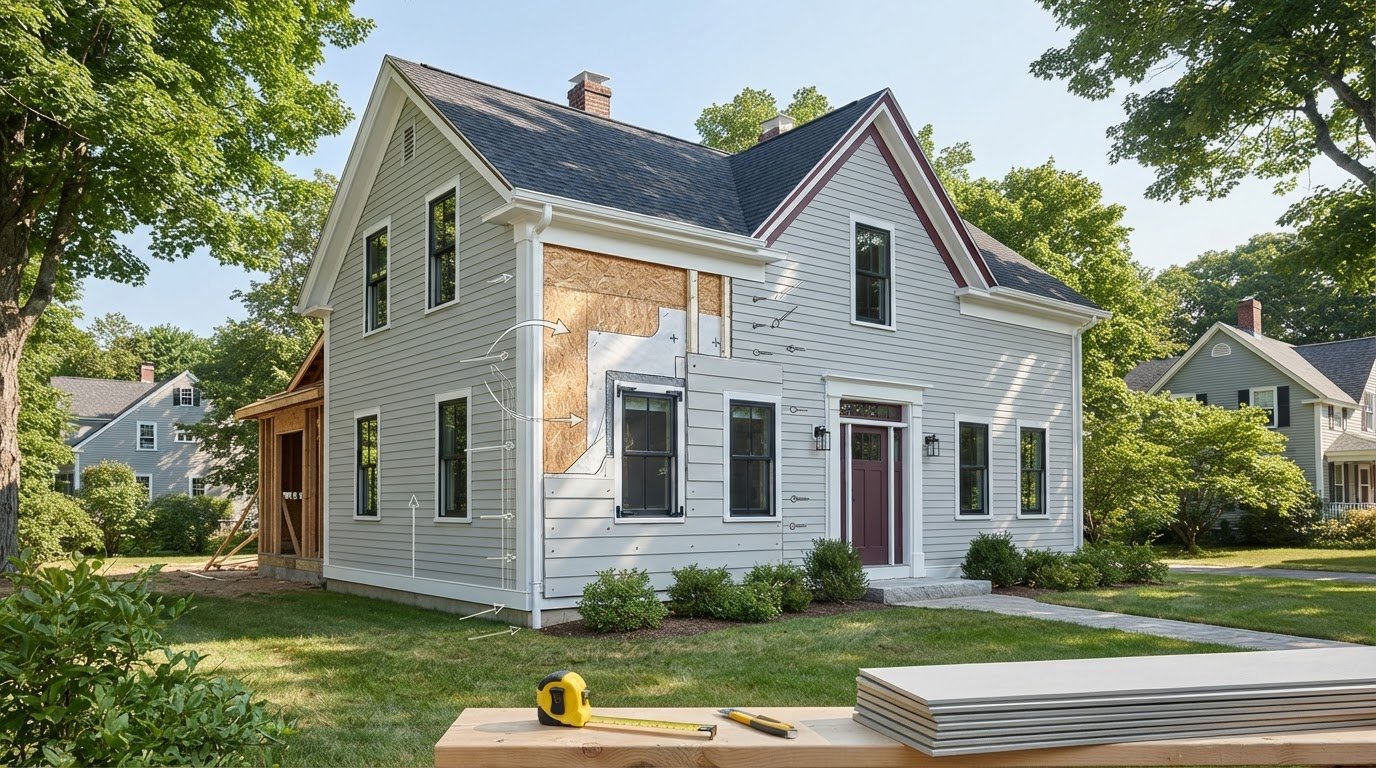
Exterior condition shapes a buyer’s first impression before they enter the home. Fiber cement siding replacement is estimated to recoup 121-145% of its cost at resale. That estimate makes siding condition worth evaluating alongside interior projects. Look for visible wear, damage, or mismatched sections, then consider whether replacement would improve both the appearance and upkeep of the home.
Start with the street view. In Hudson or Natick, stand where a prospective buyer might first see the property and note the most noticeable issue. It might be tired siding, a dated entry, or an untidy path. Address the strongest visual distraction first. This helps homeowners focus on improvements that make the exterior feel coherent, rather than adding decorative details without a clear purpose.
Landscaping maintenance in Massachusetts is stated to have a 100% return on investment. Before selling, begin with basic care: tidy visible planting beds, maintain the lawn, and keep the route to the entrance clear. These practical steps can make the property look cared for without turning landscaping into a major addition. In communities such as Waltham or Concord, tailor the work to the home’s existing landscape and overall presentation.
Timing matters. If a sale is approaching, prioritize visible exterior issues, such as damaged siding or an unkempt entrance. Next, consider whether the finishes work together across the façade. Replacing a worn component may make more sense than adding a feature that draws attention from unresolved maintenance. A short, prioritized list keeps improvements aligned with the home’s condition and resale plans.
Review the exterior in three passes. First, view it from the street and identify the most visible concern. Second, walk toward the entrance and note what affects the approach. Third, inspect the façade for wear that may need repair or replacement. This process works for homes in Ashland, Wayland, and other local communities, while recognizing that each property has different needs.
Keep the project in scale with the house. Fiber cement siding may suit a home with broadly worn exterior cladding, while basic maintenance may be a better fit when the materials remain sound. Compare each proposed change with the home’s architectural character and visible condition. A deliberate choice can strengthen curb appeal and create a more polished showing, while avoiding upgrades that don’t address the property’s actual needs.
3. Bathroom remodel resale value
A Massachusetts bathroom remodel is estimated to return approximately 70% of its cost at resale in 2026. This estimate offers a useful benchmark, but project scope matters: refreshing dated fixtures differs from adding a bathroom or rebuilding the entire room. Homeowners in Hudson, Natick, or nearby communities can weigh the room’s condition against the needs of their household and likely buyers.
For a smaller refresh, updating a worn vanity and outdated fixtures can offer a 60-70% return on investment in Massachusetts. Prioritize visible condition and everyday function. For example, replace a damaged vanity, improve storage, and coordinate fixtures rather than choosing costly finishes that dominate the room. Compare this targeted work with a minor kitchen remodel by considering each space’s condition and the updates buyers would notice.
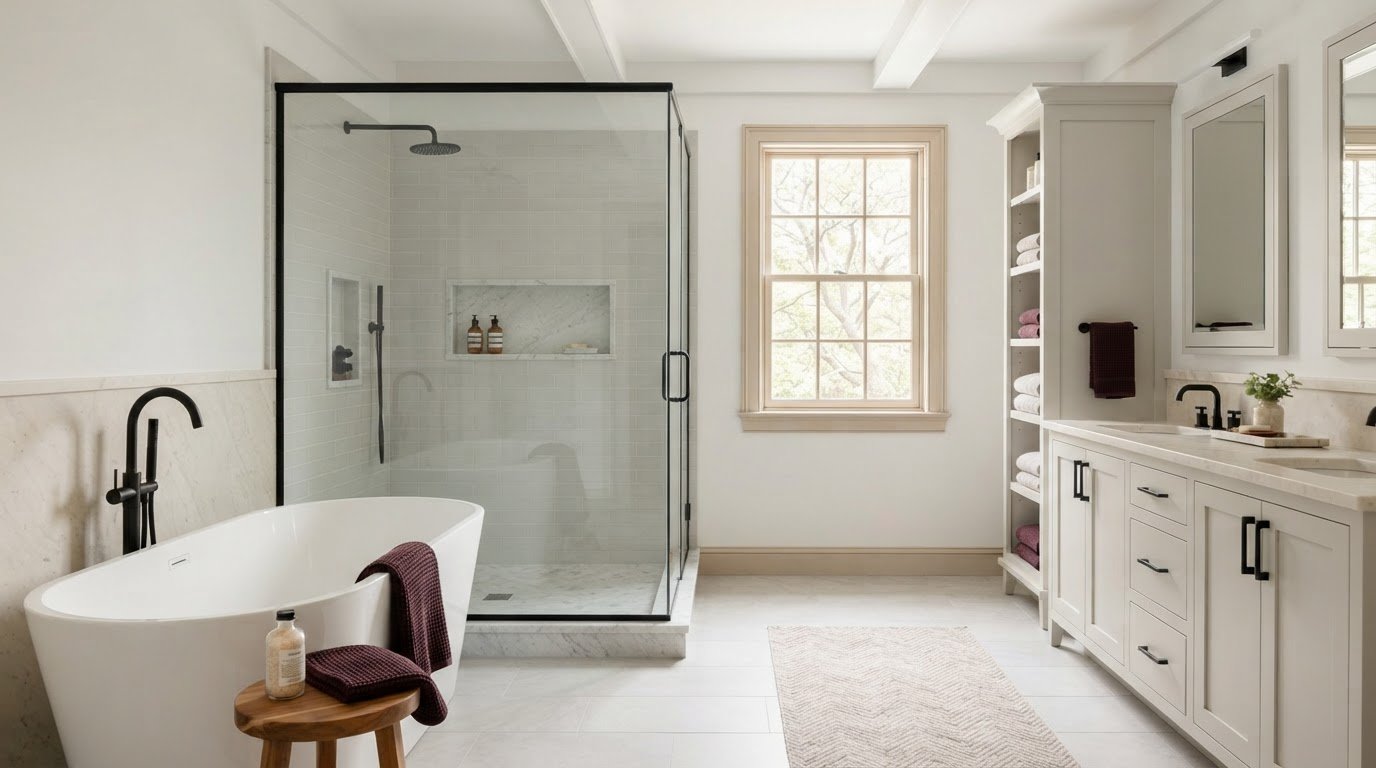
Buyer preferences can inform bathroom layout decisions. Massachusetts buyers prefer walk-in showers over traditional tubs, and double sinks are popular in primary bathrooms. A shower conversion can make a room feel more accessible and current, while two sinks may improve morning routines. Keep the design aligned with the home: a compact guest bath and a spacious primary bathroom serve different needs.
Energy-efficiency upgrades can support resale value. Energy-efficient windows in Massachusetts typically have a 65-75% return on investment, while energy upgrades can reduce heating costs by 20-40%. These improvements may strengthen a home’s overall appeal, though they are separate from bathroom remodel ROI. Pairing a bathroom refresh with window replacement should reflect the property’s condition and project priorities.
Scope influences the return. A mid-range bathroom remodel can yield a 60-70% return, while a mid-range bathroom addition has an estimated 35% ROI. Adding space may improve function, but it’s a different investment from refreshing an existing room. Before expanding, consider whether the current layout can meet household needs through better storage, lighting, or fixture placement.
Plan the work around the room’s most visible shortcomings. First, identify what feels dated or difficult to use. Next, decide whether a targeted refresh or broader remodel will address those issues. Then choose durable, coordinated finishes that suit the home’s style. This sequence keeps decisions focused on improvements buyers can recognize and homeowners can use.
Resale value also depends on how the bathroom feels alongside the rest of the home. Clean finishes, functional storage, and a well-considered shower or vanity can make it feel cared for. Compare its condition with adjoining spaces, including the kitchen and windows, so a polished room doesn’t feel disconnected from the property.
For homeowners weighing bathroom remodeling, the central choice is often targeted renewal versus added space. A fixture refresh suits dated details; a larger remodel addresses broader layout needs. Use the Massachusetts estimate of approximately 70% as a benchmark, then weigh condition, function, and resale priorities for the specific home.
4. Local buyer needs and renovation ROI
Massachusetts buyers weigh everyday function alongside appearance. Energy-efficient windows typically return 65-75% on investment, while Energy Star-rated windows can offer 70-80%. These estimates reflect different measures, but both show why efficiency may matter to homeowners facing heating and cooling demands. Before selling, compare window condition, comfort, and energy performance with other planned projects.
Living space can shape value differently from a cosmetic upgrade. A finished basement in Massachusetts typically returns 70-80% on investment, while a high-quality basement renovation can increase overall market value by 5% to 10%. Finished basements remain below-grade space, so consider how buyers may use the added room rather than assuming it functions like above-grade living space.
For homeowners considering rental potential, an accessory dwelling unit presents another value proposition. A page estimate places ADU-related property value increases at 15-25%, while legal in-law suites in finished basements can add rental potential. The deciding factors include usable layout, privacy, and whether the space suits an extended household or tenant. These projects serve a different buyer need than a simple cosmetic refresh.
Outdoor living can also influence local appeal. A deck addition in Massachusetts is estimated to return 65-75% on investment. Its value depends on how naturally it extends the home’s living space, connects to the yard, and supports entertaining. A well-planned deck may suit buyers seeking functional outdoor space, while a swimming pool can be harder to sell because of maintenance costs and seasonal usability.
Not every premium feature translates into resale value. Custom built-ins typically return 40-50% in Massachusetts, while extensive smart-home technology returns 30-50%, depending on technology level. Basic upgrades, such as thermostats and security systems, may be useful; extensive automation can bring lower returns. Homeowners planning to sell should favor features with clear everyday benefits over highly personalized systems.
Use buyer needs to rank projects before committing. First, address comfort or maintenance concerns, such as inefficient windows. Next, compare functional improvements, including a basement layout or deck. Finally, weigh specialized additions against the likely audience. Hardwood floors can return 70-80%, offering another example of a broadly recognizable feature. This practical sequence helps align renovation choices with local expectations, not just the appeal of a dramatic transformation.
5. How do Massachusetts renovation ROI estimates compare with national averages?
ROI comparisons depend on matching project scope, region, and reporting year. Massachusetts estimates differ from New England figures, even for similar work. For example, a minor kitchen remodel is estimated to return 113% in Massachusetts in 2026, while New England’s 2024 Cost vs. Value data reports a 96 percent return. Those figures describe different periods and geographic areas, so they shouldn’t be treated as a direct statewide-versus-national comparison.
The available regional examples also show why one average can mislead. New England’s 2024 Cost vs. Value data puts garage door replacement at 314.7% ROI and steel entry door replacement at 236.2%. In Worcester, listed resale returns are 80% for siding replacement and 88% for a steel entry door. The local estimates describe a specific Massachusetts market, not every home across the state.
Interior projects also vary by location and scope. Massachusetts bathroom remodels are estimated to return approximately 70% in 2026, compared with Springfield’s average bathroom remodel ROI of 72.7%. For kitchens, a full Massachusetts remodel typically returns 60-70%, while a luxury kitchen renovation is estimated at 50-60%. The distinction matters: comparing a luxury overhaul with a minor refresh can make regional comparisons misleading.
Market strength influences resale recovery. Home improvements generally recoup more in stronger real estate markets, but neighborhood demand and buyer priorities still shape individual projects. Massachusetts housing costs are stated to be 108% above the national average in 2026. That figure describes housing costs, not renovation ROI, so it shouldn’t be mistaken for evidence that every project earns a higher return.
Use comparisons as a decision tool, not a promise. First, match the renovation category and scope. Then check that the estimate uses a comparable year and geography. Finally, consider the home’s condition and likely buyers. For instance, a New England garage-door estimate can’t predict the resale return of a Massachusetts kitchen project, and a Worcester siding figure may not represent Springfield.
For a more useful local assessment, rank upgrades by visible condition, everyday function, and buyer appeal. Energy-efficient windows illustrate the regional variation: Massachusetts estimates place their ROI at 65-75%, while Springfield homeowners are cited at about 70%. These figures overlap, but neither replaces a project-specific comparison. A carefully matched estimate gives homeowners a clearer basis for choosing among renovations and weighing resale value against personal use.
Working with Remod Group provides a more grounded starting point. Homeowners planning major modifications to a property should consult professionals familiar with local zoning and code requirements.
Remod Group: Deck Construction
Remod Group builds decks for homeowners looking to extend usable outdoor living space. A deck can complement the home’s layout and create an inviting area for relaxing or entertaining. Its design should suit the property and how the space will be used.
For renovation plans that address interior or exterior condition, Remod Group offers kitchen remodeling, siding installation, and bathroom remodeling. These projects can align practical improvements with the home’s overall appearance and function. The right next step depends on which area needs attention and how the household intends to use the space.
To discuss your renovation project with Remod Group, visit groupremod.com.
Make your next renovation decision with purpose
A thoughtful approach to home renovation ROI in Massachusetts starts with distinguishing what improves daily life from what may matter to a future buyer. Let that guide your project’s scope, finish choices, and timing. The right update should feel considered in the home today, not selected solely for a resale calculation.
As you plan, define the outcome you want, whether that’s a more functional kitchen, a refreshed exterior, or a welcoming outdoor space. Remod Group offers kitchen remodeling, siding installation, and deck construction to help bring those priorities into focus. A deliberate plan can connect practical needs with a lasting vision for the property.
Ready to discuss the project that fits your home and goals? Contact Remod Group about your renovation. Take the next step with clarity, and shape a home that serves you well now while remaining compelling for what comes next.
Frequently Asked Questions
What Home Features Are Actually Worth the ROI in Massachusetts?
Practical features that address condition, comfort, and everyday use are strong candidates. To assess home renovation ROI in Massachusetts, compare the improvement with similar homes in Hudson, Natick, or nearby communities. A homeowner preparing to sell might prioritize a visibly worn exterior component before adding a highly customized feature. Ask whether the project solves a clear problem and whether local buyers can readily appreciate its benefit.
What Works Best?
Projects that suit the home’s condition and local buyer priorities tend to make the clearest case. Start by identifying a specific need, such as an outdated kitchen layout or weathered siding, then define the scope that addresses it. In Waltham, compare homes with similar layouts and conditions to understand what fits local expectations. A focused plan helps avoid spending on features that don’t improve function or appeal.
Which home renovations have the highest ROI in Massachusetts?
Among the cited estimates, fiber cement siding replacement is projected to recoup 121-145% of its cost at resale. A minor kitchen remodel is estimated to return 113% in Massachusetts in 2026. These figures cover different projects and should not be treated as a direct ranking for every home. For a local decision, compare the property’s condition and likely buyer priorities in communities such as Concord or Natick.
What is the average resale value recouped for common renovations in Massachusetts?
There isn’t one average that represents every renovation category. A minor kitchen remodel is estimated to return 113% in Massachusetts in 2026, while bathroom remodels are estimated at approximately 70%. These project-specific estimates illustrate why scope matters. Before choosing an update, consider whether it addresses a visible concern, improves daily function, or brings the home in line with nearby properties.
How do Massachusetts home values and local housing markets affect renovation ROI?
Local demand and the condition of comparable homes influence how buyers value improvements. To assess home renovation ROI in Massachusetts, compare properties in the same community, such as Hudson or Waltham, and account for differences in layout and upkeep. A strong market can support better resale recovery, but home values alone don’t determine a project’s return. The improvement’s usefulness and fit with neighborhood expectations matter, too.
Comments